
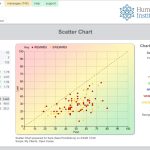
This scatter chart brings together anonymised data from 63 clients that I have been working with in a charity setting, over 2 years. Each point represents where someone started and where they were at the end of therapy.
Most clients show a clear movement towards improved wellbeing over time.
Clinically meaningful change
Effect sizes (including Cohen’s d) fall within a large range, indicating that these are not small shifts, but meaningful changes in everyday life.
At the same time, not every client shows the same degree of change.
Some shifts are more gradual, and outcomes are influenced by many factors, including life circumstances, timing, and the complexity of what someone is carrying.
Effect size refers to how big a change is — and whether it is likely to make a real difference. In practice, this suggests that therapy with me often leads to noticeable and meaningful improvement, rather than only small or temporary changes.
A consistent pattern
Most results sit above the “no change” line, suggesting a reliable pattern of improvement, while still reflecting the natural variation of real therapeutic work.
Taken together with the individual charts, this points to a clear trend:
As anxiety reduces and emotional needs are more fully met, wellbeing tends to improve.
So, which comes first? the reduction in anxiety, or the meeting of emotional needs?